



Understanding how to correctly spell "jewelry" is crucial for clear and professional communication, as the spelling varies significantly between American and British English. This guide will walk you through identifying the correct spelling based on your audience and context, ensuring you avoid common errors and maintain consistency in your writing.
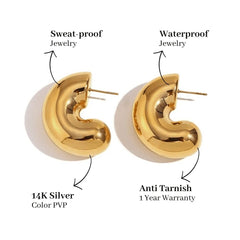
Explore our earrings collection for pieces that complement your style.
To ensure accurate spelling, consider these essential resources:
* Regional Dictionaries: American English dictionaries (e.g., Merriam-Webster, Oxford Learner's Dictionaries for American English) or British English dictionaries (e.g., Oxford English Dictionary, Cambridge English Dictionary). * Style Guides: Specific style guides relevant to your publication or industry (e.g., AP Stylebook for American journalism, Chicago Manual of Style for American publishing, Oxford Style Manual for British English). * Word Processing Software: Applications like Microsoft Word, Google Docs, or LibreOffice Writer with regional spell-check settings enabled. * Internet Access: For quick verification via reputable online sources or dictionary websites.
Step-by-Step Instructions
Follow these steps to correctly determine and apply the spelling of "jewelry" or "jewellery":
1. Identify Your Target Audience: Determine who will be reading your content. * American Audience: If your readers are primarily in the United States, use American English conventions. * British/Commonwealth Audience: If your readers are in the United Kingdom, Australia, Canada, new arrivals Zealand, or other British English-speaking countries, use British English conventions.
2. Select the Appropriate English Variant: Based on your audience, commit to either American or British English. * American English: Use "jewelry" (J-E-W-E-L-R-Y). This is the standard spelling in the U.S. * British English: Use "jewellery" (J-E-W-E-L-L-E-R-Y). This is the standard spelling in the UK and most Commonwealth nations.
3. Apply the Chosen Spelling Consistently: Once you've selected a variant, use that spelling exclusively throughout your entire document or project. Do not mix "jewelry" and "jewellery" within the same piece of writing.
4. Verify with a Regional Dictionary or Style Guide: If unsure, consult a dictionary or style guide specific to your chosen English variant. * An American dictionary will list "jewelry" as the primary spelling. * A British dictionary will list "jewellery" as the primary spelling.
5. Utilize Spell-Check with Correct Settings: Ensure your word processing software's spell-check is set to the correct regional English (e.g., "English (U.S.)" or "English (U.K.)"). This is a simple, effective tool for catching inconsistencies.
Common Mistakes to Avoid
When spelling "jewelry" or "jewellery," certain errors frequently occur:
* Using "Jewelery": This misspelling incorrectly omits an "l" from the British variant and adds an extra "e" after "l" in the American context, making it incorrect in both. * Using "Jewlery": This error omits the second "e" before the "l" or "ll," leading to a difficult-to-pronounce and incorrect spelling. * Mixing Spellings: Inconsistent use of "jewelry" and "jewellery" within a single document. This indicates a lack of attention to detail and can confuse readers. * Assuming a Single Correct Spelling: Believing there's only one universal way to spell the word without acknowledging regional variations. * Relying Solely on Generic Spell-Check: If your spell-checker isn't set to the correct regional English, it might flag the correct spelling for your audience as incorrect, or overlook a regional misspelling.
Pro Tips
Elevate your spelling accuracy with these expert-level insights:
* Establish a House Style: For ongoing projects or team writing, formalize whether American or British English is the standard. This clarity prevents "what not to do" scenarios and ensures consistency across all content. * "Jewel" as a Memory Aid: Always remember that both "jewelry" and "jewellery" are derived from the root word "jewel." This helps recall the initial 'jewel' segment before adding '-ry' or '-lery'. * Practice with Related Terms: Extend your consistency to related words. Remember that "jeweler" (American) versus "jeweller" (British) follows the same pattern. This deepens understanding and reinforces the rule for all related vocabulary. * Proofread for Regional Consistency: Beyond basic spell-check, conduct a manual review specifically looking for regional spelling variants. This is especially crucial for documents originating from multiple contributors or diverse sources. * Targeted SEO Optimization: When creating online content, consider the primary search audience. While both spellings are recognized, prioritizing the spelling most commonly searched in your target region can improve search visibility for local queries.
Quick Method
For a rapid decision on how to spell the word, follow these 3 steps:
1. Audience Location: Are they in the U.S. or elsewhere (UK, Canada, Australia, etc.)? 2. U.S. Audience? Spell it "jewelry." 3. Non-U.S. Audience? Spell it "jewellery."
Alternatives
While direct spelling typically doesn't have "alternatives," you can approach consistency and verification in several distinct ways:
* Automated Style Guides Integration: Instead of manual checking, integrate advanced grammar and style-checking software (e.g., Acrolinx, PerfectIt) that can enforce specific regional English rules across entire documents, ensuring uniform application of "jewelry" or "jewellery." This addresses common issues of human oversight. * Collaborative Review Platforms: For team projects, utilize platforms that allow multiple reviewers to flag spelling inconsistencies. This distributed approach leverages collective attention to catch errors, including how often the correct variant is used. * Linguistic Consultation: For high-stakes, international publications, employ a professional linguist or editor specializing in regional English variations. This is the "best tool" for absolute accuracy in complex contexts. * Pre-defined Templates: For frequently created documents, use templates that are pre-configured with the correct regional English settings and include a disclaimer about the chosen variant. This minimizes the risk of error from the outset.
Summary
The correct spelling of the ornamental term depends entirely on the English variant you are using. In American English, the standard spelling is "jewelry" (J-E-W-E-L-R-Y), commonly used throughout the United States. Conversely, in British English, the prevalent spelling is "jewellery" (J-E-W-E-L-L-E-R-Y), which is standard in the United Kingdom, Australia, Canada, New Zealand, and other Commonwealth countries. Both spellings are legitimate; the key is to maintain consistency with your intended audience and the specific regional conventions you are following. Always confirm your choice with appropriate dictionaries or style guides, and ensure your spell-check is configured for the correct region.
FAQ
Q: Is "jewelery" ever a correct spelling in any English variant?A: No, "jewelery" is a common misspelling and is not considered correct in either American or British English. The correct forms are "jewelry" (American) or "jewellery" (British).
Q: Does the pronunciation of "jewelry" change between American and British English?A: No, the pronunciation typically remains the same as "JOO-uhl-ree" in both American and British English, despite the difference in spelling.
Q: If I'm writing for an international audience, which spelling should I use?A: For a broad international audience, it's often best to choose one variant (e.g., American English) and stick to it consistently, or consider the primary target region if there is one. Some organizations prefer American English for its global reach, while others might defer to specific regional guidelines.
Q: Why did American English simplify the spelling to "jewelry" with one 'l'?A: American English has a historical tendency to simplify spellings compared to British English, often removing double consonants or silent letters, as seen in words like "color" (vs. "colour") and "center" (vs. "centre"). This simplification aimed for greater phonetic accuracy and streamlined writing.
Q: Are there other words that follow the same American vs. British spelling pattern as "jewelry"/"jewellery"?A: Yes, many words follow this pattern, especially those ending in '-er' vs. '-re' or those with single vs. double 'l' before a suffix. Examples include "traveler" (American) vs. "traveller" (British), "counselor" (American) vs. "counsellor" (British), and "favorable" (American) vs. "favourable" (British).
Q: How often should I check my documents for spelling consistency like "jewelry" vs. "jewellery"?A: You should check for spelling consistency every time you proofread a document, especially before final publication. Setting your word processor's spell-check to the correct regional English from the outset can significantly reduce the effort required for manual checks.