
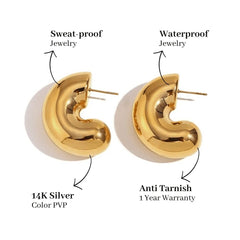



Yes, gold plated jewelry can tarnish, though the tarnishing process and appearance may differ from solid gold or silver jewelry. Understanding why gold plated jewelry tarnishes, how to prevent it, and how to care for it can help you maintain your plated pieces and keep them looking their best for as long as possible.
Explore our earrings collection for pieces that complement your style.
Key Takeaway: Does Gold Plated Jewelry Tarnish?
Yes, gold plated jewelry can tarnish, but the tarnishing typically occurs on the base metal underneath the gold plating rather than on the gold itself. Pure gold doesn't tarnish, but gold plated jewelry consists of a base metal (often brass, copper, or silver) coated with a thin layer of gold. When the plating wears thin or is damaged, the base metal can be exposed to air and moisture, leading to tarnishing. Factors that contribute to tarnishing include exposure to moisture, chemicals, sweat, lotions, perfumes, and normal wear. The rate of tarnishing depends on the thickness of the gold plating, the quality of the base metal, and how the jewelry is cared for. To prevent tarnishing, store gold plated jewelry properly, avoid exposure to chemicals and moisture, clean it gently, and handle it with care to preserve the plating.
Understanding Gold Plated Jewelry
What is Gold Plating?
How gold plated jewelry is made:
- Base metal: Usually brass, copper, or silver
- Gold layer: Thin coating of gold applied to base
- Plating thickness: Varies, typically very thin
- Process: Electroplating or other methods
- Result: Gold appearance at lower cost
Why Gold Plating Tarnishes
Reasons gold plated jewelry can tarnish:
- Base metal exposed when plating wears
- Base metals (brass, copper) tarnish easily
- Thin plating can wear off over time
- Exposure to air and moisture causes tarnish
- Chemical reactions with base metal
Factors That Cause Tarnishing
Exposure to Moisture
How moisture affects gold plated jewelry:
- Water can accelerate tarnishing
- Humidity speeds up the process
- Sweat can cause tarnishing
- Swimming pools and hot tubs are particularly harsh
- Moisture exposure should be minimized
Chemicals and Substances
Substances that cause tarnishing:
- Chlorine: Very harsh on plated jewelry
- Perfumes and lotions: Can damage plating
- Hairspray: Contains chemicals that affect plating
- Cleaning products: Harsh chemicals damage plating
- Cosmetics: Can cause tarnishing
Normal Wear and Tear
How everyday use affects plating:
- Friction can wear away plating
- Repeated contact with skin
- Rubbing against clothing
- Normal movement and activity
- Plating becomes thinner over time
Signs of Tarnishing
Visual Indicators
How to recognize tarnishing:
- Dull or darkened appearance
- Discoloration or color changes
- Loss of shine and luster
- Green or black spots (from base metal)
- Uneven coloring or patches
When Tarnishing Occurs
Timeline for tarnishing:
- Can happen quickly with poor care
- May take months or years with good care
- Depends on plating thickness
- Varies with exposure and use
- Quality of plating affects longevity
Preventing Tarnishing
Proper Storage
How to store gold plated jewelry:
- Store in airtight containers or bags
- Use anti-tarnish storage solutions
- Keep away from moisture and air
- Store pieces separately to prevent scratching
- Use soft cloth or jewelry pouches
Avoiding Exposure
What to avoid to prevent tarnishing:
- Remove before showering or swimming
- Take off before applying lotions or perfumes
- Avoid contact with cleaning products
- Remove during exercise or heavy sweating
- Keep away from harsh chemicals
Cleaning Gold Plated Jewelry
Gentle Cleaning Methods
Safe ways to clean gold plated jewelry:
- Use soft, lint-free cloth
- Gentle soap and water (sparingly)
- Dry immediately and thoroughly
- Avoid abrasive materials
- Clean gently to preserve plating
What to Avoid When Cleaning
Cleaning methods that can damage plating:
- Harsh chemicals or cleaners
- Abrasive materials or scrubbers
- Ultrasonic cleaners
- Excessive rubbing or scrubbing
- Soaking for extended periods
Extending the Life of Gold Plating
Careful Handling
How to handle gold plated jewelry:
- Handle gently to avoid scratching
- Put on after applying lotions and perfumes
- Remove before activities that could damage
- Clean regularly but gently
- Store properly when not wearing
Maintenance Tips
Ways to maintain gold plated jewelry:
- Regular gentle cleaning
- Proper storage
- Avoiding harsh conditions
- Handling with care
- Professional cleaning if needed
Quality of Gold Plating
Plating Thickness
How thickness affects tarnishing:
- Thicker plating lasts longer
- Thin plating wears off more quickly
- Quality varies by manufacturer
- Thicker plating more resistant to tarnish
- Investment in quality pays off
Base Metal Quality
How base metal affects tarnishing:
- Some base metals tarnish more easily
- Quality base metals last longer
- Copper and brass tarnish quickly
- Silver base may tarnish differently
- Base metal quality matters
Comparing to Other Jewelry Types
Gold Plated vs. Solid Gold
Differences in tarnishing:
- Solid gold: Doesn't tarnish (pure gold)
- Gold plated: Can tarnish when base metal exposed
- Durability: Solid gold more durable
- Maintenance: Solid gold requires less care
- Cost: Gold plated more affordable
Gold Plated vs. Gold Filled
Understanding the difference:
- Gold filled: Thicker gold layer, more durable
- Gold plated: Thinner layer, less durable
- Tarnishing: Gold filled more resistant
- Longevity: Gold filled lasts longer
- Price: Gold filled typically more expensive
Dealing with Tarnished Gold Plated Jewelry
Cleaning Tarnished Pieces
How to clean tarnished gold plated jewelry:
- Use very gentle cleaning methods
- Soft cloth and gentle soap
- Avoid harsh chemicals
- Clean carefully to preserve remaining plating
- Professional cleaning if heavily tarnished
When to Replace
Signs it may be time to replace:
- Extensive tarnishing that won't clean
- Plating worn away significantly
- Base metal showing through
- Jewelry no longer looks good
- Consider re-plating or replacement
Common Questions
How Long Does Gold Plating Last?
Lifespan of gold plated jewelry:
- Varies based on care and quality
- Can last months to years
- Depends on plating thickness
- Affected by wear and exposure
- Proper care extends lifespan
Can You Prevent All Tarnishing?
Understanding tarnishing prevention:
- Can minimize but not always prevent
- Proper care significantly reduces tarnishing
- Some tarnishing may be inevitable
- Quality and care make a difference
- Regular maintenance helps
Conclusion
Yes, gold plated jewelry can tarnish, typically when the base metal underneath the gold plating becomes exposed to air and moisture. The tarnishing occurs on the base metal (often brass or copper) rather than on the gold itself, since pure gold doesn't tarnish. Factors that contribute to tarnishing include exposure to moisture, chemicals, sweat, lotions, perfumes, and normal wear that can thin or damage the plating. To prevent tarnishing, store gold plated jewelry properly in airtight containers, avoid exposure to chemicals and moisture, clean it gently, and handle it with care. While some tarnishing may be inevitable over time, proper care and maintenance can significantly extend the life and appearance of gold plated jewelry. Understanding how to care for gold plated pieces helps you enjoy them longer and maintain their beautiful appearance.